The science of long, healthy lives keeps arriving at a simple pleasure: a table where a chair is kept for you. On the small rituals that make such a place, and how to keep them.
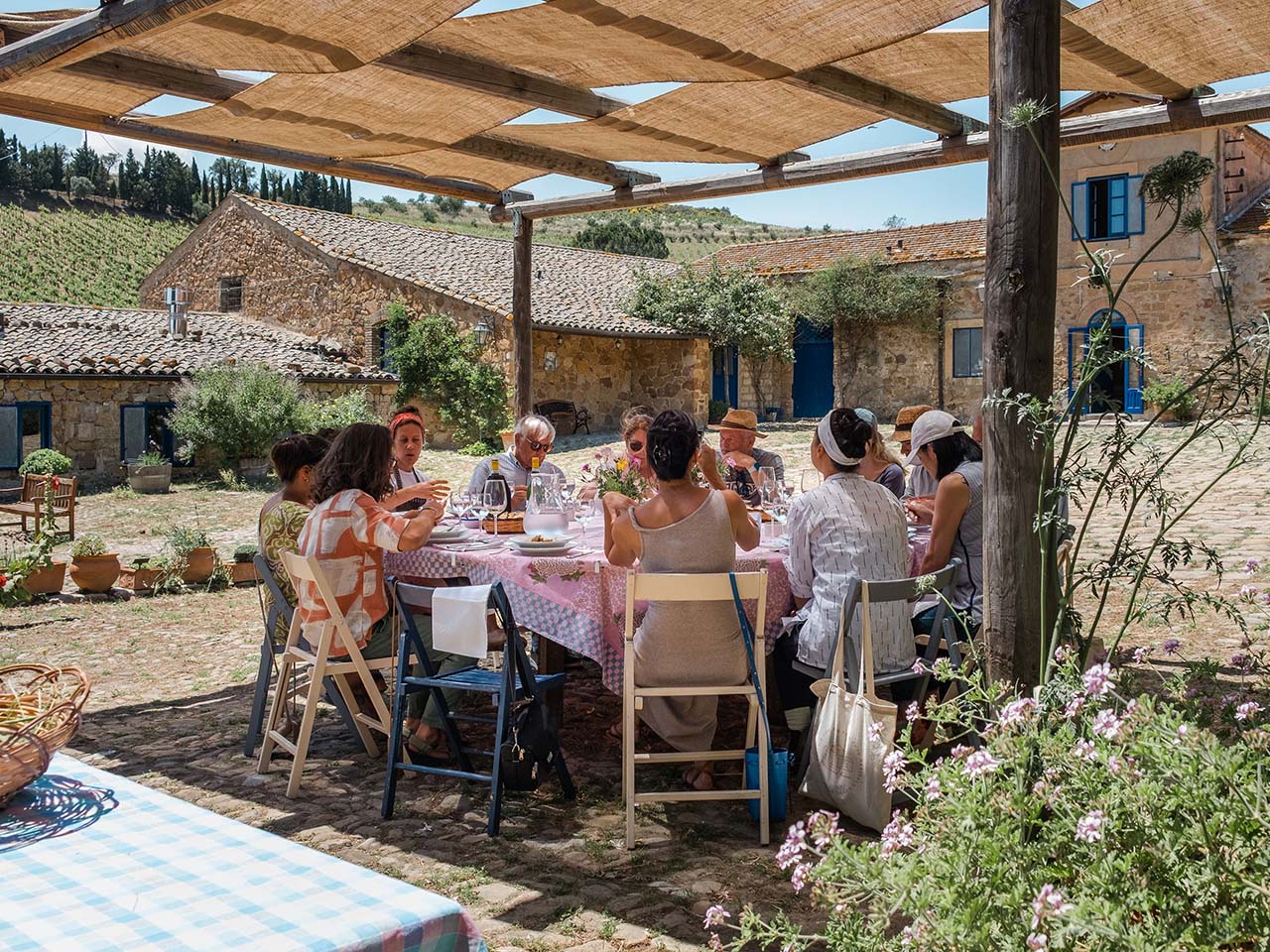
Most of us can point to a table where a chair is kept for us. It might be a kitchen table where the same four people have gathered on Sundays for longer than anyone bothers to count, or a corner of a café in Lisbon that the owner stopped reserving years ago because everyone already knows who sits there. Arrive late and someone has already poured your glass. Nobody set it up as a health measure. It began because someone asked and someone else said yes, and then it kept happening.
Over time a habit like this turns into a ritual, and what sustains it tends to be mundane: a fixed day and a known hour, which spare everyone the weekly decision about whether to make the effort. It also collects a history of its own. A friend moves away and still returns for it when in town. Someone brought along once becomes a regular. There may be a season when it pauses, and then, without much discussion, it resumes.
Rituals like that tend to go unremarked. They hold the conversations that fit nowhere else: the half-formed plan, the appointment you have not yet mentioned at home, the book you want to argue about with someone who has actually read it. They are also, as it happens, one of the more consistent things that research on healthy aging has found.
The wider frame is better news than it usually sounds. In a working paper released by the National Bureau of Economic Research in June, the economists Liran Einav and Amy Finkelstein compared American Medicare data from 1993 and 2017. By their analysis, the 2.4 years of life expectancy gained at age 66 over that period were healthy years, free of serious physical or cognitive limitation. The paper has not yet been peer reviewed, and it describes one country. It sits comfortably, though, beside a study from the Yale School of Public Health published in March in Geriatrics. A team led by Becca Levy followed more than 11,000 Americans over 65 for up to twelve years and found that 45 percent improved in cognition, walking speed, or both at some point along the way. People who held positive beliefs about aging were more likely to be among them.
Against that backdrop, the social side of health has moved from pleasant footnote to the subject of large and careful studies. The World Health Organization’s Commission on Social Connection estimated last year that roughly one person in six worldwide is lonely, and linked loneliness to some 871,000 deaths a year. Those are modeled figures describing the whole world, and they say little about any particular life. What they do show is that connection is now studied with the seriousness once reserved for blood pressure and exercise.
The feeling and the floor plan
This is where the findings grow more interesting, and a little less tidy. In June the Journal of Personality and Social Psychology published a coordinated analysis led by Tomiko Yoneda at the University of California, Davis. It drew on eleven long-running studies covering 175,070 adults in 18 countries and separated two things that are easy to blur: how often people were in contact with others, and how connected they felt. Feeling lonely predicted a shift toward cognitive impairment, and a shorter life, even after contact frequency was taken into account. Contact frequency on its own showed no consistent link with cognition.
So the feeling carries weight of its own. It would be convenient to stop there, with the comfortable idea that the shape of a social life hardly matters as long as the closeness is real. The evidence does not quite allow it. A study in Nature Communications in January, by Daisy Fancourt, Andrew Steptoe and Mikaela Bloomberg at University College London, followed 7,047 people in the English Longitudinal Study of Ageing. Living alone, being less woven into community life and having less support were each associated with faster physiological aging. The largest meta-analysis on the subject, 90 cohort studies with 2.2 million participants published in Nature Human Behaviour in 2023, found objective isolation linked to a somewhat higher mortality risk than loneliness. Long before that, a 2010 review led by Julianne Holt-Lunstad at Brigham Young University had pooled 148 studies and more than 300,000 people, and found a 50 percent greater likelihood of survival among those with stronger social relationships, measured as a blend of how large a network was and how much support it gave.
Both findings hold at once. How close we feel is one measure, and the practical architecture of a week, who is nearby and how often, is another. They tend to move together, which turns the useful question toward structure: what keeps the right people near, month after month, without anyone having to start from scratch each time.
Tango in the park
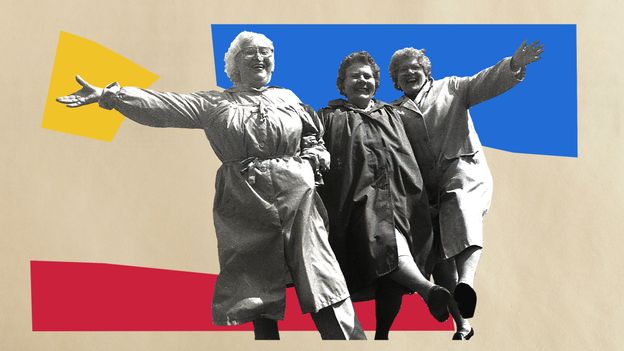
Read for texture rather than headlines, much of the research describes what everyday language would call ritual: gatherings that recur. LatAm-FINGERS, a trial published in The Lancet in July, enrolled 1,065 adults at elevated risk of cognitive decline across eleven Latin American countries. Over two years, a structured program of exercise, nutrition, cognitive training and social engagement produced greater gains in overall cognition than lighter health advice. That program also met, again and again. It included 38 group sessions intended partly for social connection, and exercise classes that brought in salsa and tango, sometimes in public parks. Because everything was tested as one package, nobody can say how much the dancing contributed on its own. What the design reveals is that the people who built it counted the regular gathering as part of the intervention.
Other kinds of standing commitment show a related pattern. Researchers at Texas State University used the Health and Retirement Study to follow 2,605 Americans and reported in Social Science & Medicine that volunteering, both at under 50 hours a year and at more than 200, went along with slower epigenetic aging two years later, with the association strongest among people who had already retired. Like most findings in this field it is an association, and people who volunteer may differ in other ways. It fits, all the same, with the idea that a regular reason to be somewhere, with others, leaves a trace.
Recurrence does not mean constant company. Netta Weinstein at the University of Reading and her colleagues asked 178 adults to keep daily records for three weeks, and published the results in Scientific Reports. On days with more time alone, participants felt lonelier and a little less satisfied, and also less stressed and more autonomous. When the solitude was chosen, the downsides shrank and did not accumulate from one day to the next. The sample was small and was not drawn from later life, yet the pattern will be familiar to anyone who guards a morning of reading or a walk taken without conversation. Time alone and time with others seem to work as a rhythm, each making the other easier to enjoy.
Something in the blood
Why would something as ordinary as company show up in a blood sample? A 2025 study in Nature Human Behaviour, from researchers at Fudan University and the University of Cambridge, measured nearly 3,000 plasma proteins in 42,062 participants of the UK Biobank. Isolation and loneliness were associated with proteins involved in inflammation and immune defense, and a genetic method known as Mendelian randomization pointed to a likely causal effect of loneliness on five of them. Many of these proteins in turn predicted heart disease, stroke, diabetes and death over roughly fourteen years. It is one line of evidence, and it gives an old observation a plausible biological route.
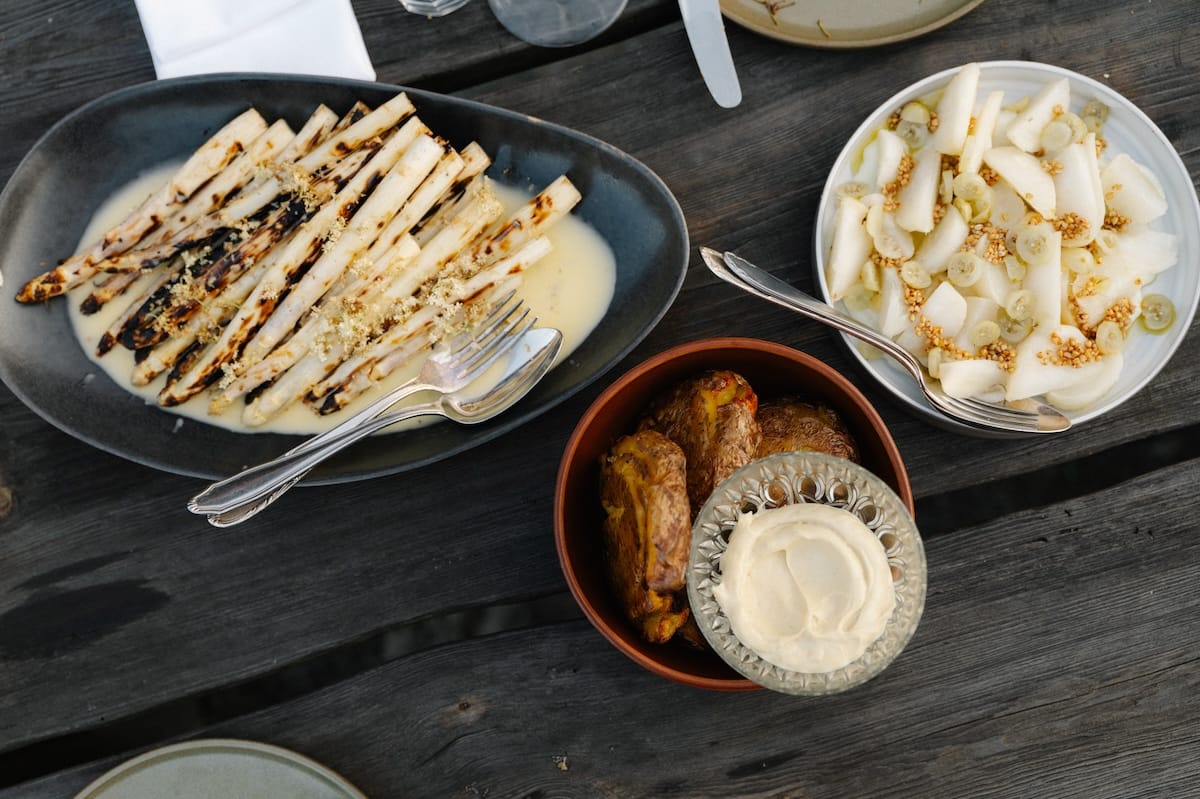
The table itself has become a subject of study. Jan-Emmanuel De Neve, who researches wellbeing at the University of Oxford, has found that how often people share meals tracks their life satisfaction about as closely as income or employment status, as BBC Future reported in August. He is careful to note that shared meals may partly stand in for social life in general. Anyone who has lingered over a second espresso after a long lunch in Emilia-Romagna may suspect the meal carries something of its own. The word companion, after all, comes from the Latin for the person you share bread with.
Quality shows up in smaller, closer studies too. Robert Waldinger and Marc Schulz of the Harvard Study of Adult Development once asked 47 couples in their eighties to keep diaries for eight days. On days with more physical pain, those in satisfying marriages held their mood steady, while simply spending more hours around other people offered no such cushion.
Not every study points the same way, and a fair account should say so. An analysis of 10,217 people aged 65 to 94 in twelve European countries, published in Aging & Mental Health this spring, found that lonelier participants began with weaker memory scores yet did not lose memory faster over the years that followed. For memory at least, loneliness appeared alongside a lower starting point without speeding the decline. Most of the evidence in this field is observational, and cause and effect can run in either direction.
The garden outside the walls
Around 306 BC, Epicurus bought a house with a garden just outside the walls of Athens and lived there with friends and students, a community that, unusually for its time, admitted women and slaves. He is often remembered as a philosopher of indulgence, which says more about his later reputation than his teaching. Of all the things wisdom provides for a happy life, he held, friendship is by far the most important. The Garden was that conviction put into practice: the same people, simple meals, long conversations, and the habit of returning. Twenty-three centuries later the studies are larger and their language more cautious. The shape they describe would not have surprised him.
None of this calls for a program. It invites a quieter kind of inventory, of the rituals in a given month that would still take place if nobody had to organize them again. For some it is a standing lunch, for others a choir on Tuesday evenings, a walk that has turned into a habit, or a sauna by the water in Oslo where the same faces appear each week. For many there is also an invitation not yet sent. In Copenhagen, Folkehuset Absalon, a former church in Vesterbro, serves dinner at long tables every evening at six, with a table kept free for anyone who turns up without a ticket. The research will go on refining its estimates, and some of today’s figures will shift. The table, meanwhile, can be set again next week at the same hour, with a chair kept free for whoever you decide to ask.